Strategy.
Security.
Governance.
From the corridors of intelligence to the helm of constitutional leadership — Ravindra Narayana Ravi represents a rare convergence of national security expertise, strategic governance, and institutional authority that has shaped India's security architecture and administrative framework.
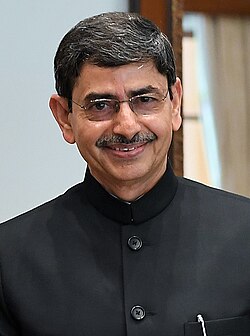
The Convergence of Intelligence & Governance
A leadership philosophy forged in the crucible of national security, refined through decades of service at the highest echelons of India's intelligence and administrative apparatus.
Strategic Vision
Possessing an extraordinary ability to synthesize complex intelligence data into actionable governance strategy, R. N. Ravi brings an analytical depth that transforms administrative decision-making into a science of precision and foresight. His approach to governance is rooted in data-driven analysis, an approach shaped by decades within India's most rigorous intelligence institutions.
Security Doctrine
Drawing from years within the CBI, IB, and as Deputy National Security Advisor, his governance philosophy integrates security awareness at every level of administration. He views the security of the state not as a separate function, but as a fundamental pillar that underpins every dimension of effective governance, from economic development to social harmony.
Constitutional Authority
As a multi-state Governor, R. N. Ravi has demonstrated a profound understanding of India's constitutional framework, wielding gubernatorial authority with the precision of a seasoned intelligence strategist. His deep respect for constitutional processes, combined with his unwillingness to be a mere ceremonial figure, defines his approach to the highest offices of state governance.
Intelligence to Governance
A distinguished trajectory spanning five decades — from frontline intelligence operations to the constitutional helm of Indian states.
Born in Patna, Bihar
Ravindra Narayana Ravi was born on 3 April 1952 in Patna, the capital of Bihar. His early life in one of India's most historically rich cities shaped his deep understanding of India's socio-political fabric and the complexities of its democratic processes.
Brief Career in Journalism
Before entering public service, Ravi explored journalism, developing skills in research, investigation, and the art of narratives — skills that would prove instrumental in his intelligence career. This period gave him a unique vantage point on India's media landscape and politics.
Indian Police Service (IPS)
Inducted into the prestigious Indian Police Service in the 1976 batch, Ravi embarked on a career that would take him through the most sensitive corridors of India's security establishment. The IPS provided the foundational training in leadership, operational excellence, and institutional discipline.
Intelligence Services
Serving in the Central Bureau of Investigation and the Intelligence Bureau, Ravi developed expertise in counter-terrorism, internal security, and strategic intelligence. His work in these agencies placed him at the nerve center of India's efforts to address existential threats.
Chairman – Joint Intelligence Committee
Appointed as the Chairman of the Joint Intelligence Committee, Ravi now oversaw the coordination of intelligence across agencies, synthesizing inputs from diverse sources to advise the highest levels of the Indian government on matters of national security and strategic interest.
Deputy National Security Advisor
As Deputy NSA, Ravi operated at the apex of India's national security architecture. Working alongside the National Security Advisor, he contributed to critical policy formulations on counter-terrorism, border security, and India's strategic posture on the global stage.
Governor of Nagaland & Meghalaya
Appointed as Governor of Nagaland (with additional charge of Meghalaya), Ravi transitioned from the intelligence domain to constitutional governance. His tenure was marked by active engagement with peace processes and northeast security dynamics.
Governor of Tamil Nadu
Ravi's appointment as Governor of Tamil Nadu marked a significant shift, bringing his security-first governance philosophy to one of India's most politically dynamic and economically vital states. His tenure became one of the most discussed in recent Indian gubernatorial history.
Governor of West Bengal
Since 12 March 2026, Ravi serves as the Governor of West Bengal, carrying forward his distinctive approach to constitutional governance. This appointment represents the culmination of a career that has traversed the full spectrum of India's administrative apparatus.
Defining Moments of Leadership
Key milestones that illustrate the breadth and depth of a career spanning intelligence, security, and governance.
Criminal Investigations
Leading high-profile investigations at the Central Bureau of Investigation, developing the analytical rigor that would define his career trajectory.
Intelligence Bureau
Serving within India's premier domestic intelligence agency, building expertise in threat assessment, counter-intelligence, and national security operations.
Joint Intelligence Chair
Chairing the committee responsible for coordinating India's intelligence inputs across agencies, directly advising the Prime Minister's office on strategic matters.
Deputy National Security
Operating at the apex of India's security establishment as Deputy National Security Advisor, shaping policy responses to emergent national and global threats.
From Intelligence to the Raj Bhavan
R. N. Ravi's transition from the intelligence domain to gubernatorial office represents one of the most unique career arcs in modern Indian administration. His experience as the helmsman of national security has given him a perspective on governance that is fundamentally different from that of typical political appointees.
As Governor across Nagaland, Meghalaya, Tamil Nadu, and now West Bengal, he has navigated complex state-center dynamics, engaged with peace processes in insurgency-affected regions, and brought a security-driven governance approach to some of India's most politically charged states. His tenure is characterized by an active, interventionist gubernatorial style that draws upon his intelligence background to engage deeply with both the administrative machinery and the constitutional processes that define India's federal structure.
His understanding of institutional processes, combined with his strategic analytical capabilities, allows him to approach the constitutional role of Governor not as a ceremonial position, but as a critical nexus of federal governance, national integration, and democratic accountability.
Explore Governance Roles
Discover the Full Narrative
Delve deeper into the intelligence career, constitutional roles, and strategic philosophy of one of India's most distinguished public servants.